Monday, November 19, 2007

Taught a Lesson


When I lived and owned property in Stafford Springs, Connecticut, local police, called constables, and Troop C, Connecticut State Troopers, would often say, “Big Mouth is going to be taught a lesson.”

Well expecting anything for your tax dollars is a mistake. I was a co-founder of the Stafford Springs Crime Watch. I suggested legislation to deal with youth crime. Officer Prochaska told me to shut my mouth and told me I would be arrested and kicked out of town if I persisted on suggesting legislation to elected officials. So, in reality, a citizen can be arrested, lose his or her home, family, and job just for pursing rights that are supposedly guaranteed in the US Constitution.

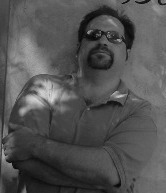
My then wife [pictures, freespeech.com links no longer work], fell down the stairs with the flu waking me up. I called her an ambulance. Officer Prochaska showed up and proceeded to slam me into my house, bouncing me off my aluminum siding, saying I was resisting. He called to the firemen and ambulance crew, “See, he’s resisting.”

“Resisting what?” I said.

Prochaska then proceeded to try to goad my wife into lying and telling him what he wanted, that I had pushed her down the stairs. I didn’t, and my wife and I were getting along. Had we not, my life would have been altered from that day on. Domestic assault, resisting arrest, and even a concocted story of assaulting a police officer would have ruined my life forever, then.

My wife and I later traveled all over Europe for an extended period. We came back to Stafford. Peter Panciera, a then local powdered cocaine dealer was so high on his own product, he thought that I was an undercover police officer. So he attacked me, beat me, and bit so far into my ear that I had blood streaming down my neck, across my stomach, soaking my underwear. I dialed 911.

Police showed up and took my statement and interviewed the drug customers about their friend, whom they said they did not know, making a false statement to police. I convinced officers to tour the local bars with me the following weekend. We found my attacker. I demanded that a hepatitis and AIDS test be done on my attacker as he had bit me. Officer Prochaska “re-investigated” the case, the drug customers then suddenly remembered that I had attacked their friend and he was scared of me. A bunch of crap and only I was arrested by Prochaska 6 weeks after the incident in front of my wife. It was ok for a drug dealer to beat me and bite me, but it was not ok for me to be a victim of a beating with a bitten into ear.

I faced the maximum prosecution for breach of peace and assault 3rd for having been assaulted, getting police involved by dialing 911. Police officers then explained to me that is was stupid to dial 911 after being attacked in a downtown area if you don’t have witnesses other than yourself when an attacker has friends that will make statements together, false or not, believable or not. I beat that wrap as I had refused to get a lawyer and would have had the 911 tape played and would bring up the fact that I was bitten, and the biter was never arrested.

I wrote letters to the editor and contacted local elected officials about how police seemed to partner with prostitutes, vandals, drug dealers, and other criminals, using them as “informants” to maximize revenue collection and asset confiscation, not in aiding downtown property and business owners that desperately needed police protection and service to survive.

State Police Officers would show up and follow me around all day wherever I went. They were escorting me, to and from wherever I worked, concerning my customers as why police were shadowing me. Officers openly told me to shut up and leave Connecticut. Police were out to destroy my life, make me lose [these properties], break up my family, and make me lose my job using taxpayer dollars.

A police informant was offered money to set me up. [click here for more]

Police were openly trying to recruit criminals and others with favors to make false statements and/or to terrorize me out of Connecticut.

I was then attacked by a police informant, Brian Caldwell. Only I was arrested for resisting being beaten in my own dark driveway. Caldwell left messages on my tenants’ and my answering machines telling me and others he would kill me when I came home. He tried. I was sentenced to a year in prison, 3 years probation, by Judge Jonathan Kaplan. Troopers Amaral and Longlois committed perjury at trial saying I never tried to lodge a complaint against Caldwell.

While I was awaiting trial, Caldwell either attacked me, or tried to attack me 6 more times.

I was told by Officer Prochaska and Resident State Trooper Mulcahey that I was kicked out of Connecticut and if I didn’t leave, I would be arrested again. The pair allegedly offered Peter Coukos help in obtaining a gun permit if he threatened and terrorized my daughter and I out of Connecticut. Coukos left a message on my voicemail threatening my daughter’s life. Coukos assaulted me punching and slapping me in the back of my head, in my yard telling me, he wanted my then 14 year old daughter to perform oral sex on him. I didn’t fight back as I would be the only one arrested again. I played the tape of the threats made against me and my daughter by Coukos. Prochaska and Trooper Mulcahey told me that I would be arrested, not Coukos, if I tried to have charges pressed against Coukos.

There is no one to complain to that will investigate violations of civil rights as described above. The courts are fixed and lawyers are intimidated into acting with the official abusers and police, not their clients.

“Big Mouth” was taught a lesson. The US Constitution doesn’t apply and there is no “American Justice”.

-Steven G. Erickson

Should Judges ignore illegal behavior of other judges?

Open Letter to Chief Justice William J. Sullivan of Connecticut


[click here] for more
www.freespeech.com links in above link no longer go to intended posts

Are judges guilty of felonies if they obstruct justice and don't turn in information in on other judges that have committed crimes?

* * * *

[click here] for my yet unanswered letter to Attorney General Richard Blumenthal

* * * *

[click here] for my 9-15-01 letter to President George W. Bush. I was attacked on my property 10-11-01.

* * * *

[click here] for a list of all my youtube.com videos

* * * *

State Police Begin New Internal Probe

By TRACY GORDON FOX | Courant Staff Writer
July 18, 2007

State police have begun an internal affairs investigation into a racially offensive video and still photograph that were e-mailed several months ago among troopers assigned to the state police forensic laboratory, including to its commander.

One e-mail shows a still photograph of a black man lying on the street surrounded by watermelon rinds and chicken bones. The headline on the e-mail read "fatal overdose?" Another e-mail had a video attachment of a tow-headed white girl with a lisp, who sat at her kitchen table in a yellow shirt and spewed hateful racial slurs with the encouragement of two adults. The subject line simply says: "Little girl with a speech problem." [more]

* * * *

[click here] for my open letter to Connecticut State Police Commissioner John A. Danaher III


* * * *

[click here] for Faces from a Police State, Connecticut. Police Misconduct is a Connecticut art form.

[click here] Is there still "Gay Bashing" going on in the ranks of the Connecticut State Police?

* * * *

my email: stevengerickson@yahoo.com

Labels: , , ,

Thursday, March 08, 2007

From the Antishenes Blog:

RIP "Rick the Ruler"


It has been almost ten years since the death of Enrique "Rick the Ruler" Ramirez, a Los Solidos Gang leader. But as the recent photo above demonstrates Rick may be gone, but not forgotten.

It was the annual Puerto Rican Day Festival in Pope Park, Hartford, Connecticut that started a series of events that are still unfolding ten years later. Gang members murdering other gang members, federal law enforcement feuding with state law enforcement and many, many people left asunder in the wake of the murder of "Rick the Ruler." Hartford Homicide Detectives disciplined, fired. Federal agents ordered not to investigate Hartford Police misconduct. Lawsuits all around.

June 5, 1997 was a sunny warm day. Hundreds of party goers flocked to Pope Park for the festival, including a good amount of gang members and police officers. Rick was an enforcer for the "Solids" as they affectionately called each other. He was a prick, drunk and bully. And at the end of this festive day, he was dead. Murdered by his own gang. As Robert De Niro who plays Michael Vronsky is famous for saying in the movie, The Deer Hunter "one shot." That's all it took to murder Rick. One shot in the back and this tough guy was dead.

The feds informant, Abdel "Conejo" Rodriguez tipped them off immediately that he knew who shot Rick. He wore a wire for his handlers, he got the killer to admit that he, "went all out for [his]colors." Julio Ramos, a Los Solidos, spilled his guts to Conejo and in turn the feds. He gave up the location of the murder weapon, and shot his mouth off in detail about the murder. He didn't ever explain why he did it. No one asked. Julio Ramos , is now serving a 25 year federal sentence for the murder.

He plead guilty to the murder at the same time Gilberto Rivera, a supposed "offtee" or wannabee of the gang was arrested by the Hartford Police and Hartford State's Attorney James Thomas. Rivera was a patsy for the state officials, ultimately released and awarded $600,000 for his false arrest and imprisonment.

End of story, all is safe in the Insurance City? Not quite.

While the Feds and state argued over who shot Rick, a very important piece of the puzzle was left unanswered. You see, no one gets assassinated in a gang without approval. Julio Ramos didn't wake up that day and decide he was going to murder a gang enforcer. Yet, absolutely no investigation into the genesis of this murder ever occurred.

Hmmm? Could it be that the Federal Authorities lead by Deputy United States Attorney John Durham didn't want to know what their informant "Conejo" really knew?
Was the Hartford Police and Hartford State's Attorney Thomas so bent on showing who was boss that they simply forgot to investigate this crucial part of the murder?

How ironic if FBI informant busting federal prosecutor John Durham actually had a murdering paid informant working for him.

Durham was the federal prosecutor who took down FBI agents in Boston for, among other things, allowing federal informants James "Whitey" Bulger and his Winter Hill Gang to carry out numerous murders and crimes under their watch.

Could Los Solidos leader and federal informant Conejo have ordered the assasination of the troublesome Rameriz?

Who do we get to investigate this one? Rest in Peace Rick.

1 comments:

Rich said...

I've always wondered who put the "Rat Jacket" on Abdiel "Conejo"
Rodriguez by leaking his name,and street name to the Hartford Courant.
The leak had to come from a law enforcement source. Someone with a big interest in seeing him take a dirt nap.


[click here] for Antishenes blog

* * * *

[click here] for http://starkravingviking.blogspot.com/

Labels: , ,

Tuesday, March 06, 2007

Legislative Reforms Needed


Connecticut State Rep. Tim O'Brien [website]
[official website]
emails: Tim.OBrien@cga.ct.gov
tim@timobrien.org

Mr. O’Brien,
I didn’t like heroin and crack cocaine being sold near the boarded up properties that I bought and fixed up. [video]

Connecticut State Police were aiding corrupt Stafford Springs politicians and their friends to rid the town of poor whites and minorities and to eliminate business competition for the connected and powerful in town. Should these racist/elitist policies of Separate and Unequal continue in Connecticut?

I went to Tony Guglielmo [more], my State Senator to tell him what was going on suggesting a solution in proposed legislation, “Civilian Oversight of Police”.

If citizens can be arrested and put in prison for wanting ethical government, courts, and police, what is Connecticut coming to? When is enough, enough?

I like, Ken Krayeske, [story pics] was placed on the secret Connecticut State Police “Enemies List”. I have suffered since, for years, and so has my family and daughter. I lost my home, my small business I built over 2 decades, my dog, retirement, health insurance, credit, and ability to get most jobs and housing, all for what?

Police commit perjury and worse and there are no consequences. Informant funds are used to set up citizens that want ethical police practices. Will legislators review cases of those retaliated against for wanting honest courts, police, and State Government? Will our bogus records be expunged? Will there be compensation?

Should I and others suffer for the rest of our lives because we were covertly ruined as targets of out of control Connecticut State Police? Should the Connecticut Department of Administrative Services operate like a domestic spying organization?

Will you help victims of the Official Connecticut Corruption Goon Squads? [pics story]

Thank you,

Steven G. Erickson
972 Putney Rd # 156
Brattleboro, VT 05301
(former Connecticut Political Prisoner # 305662)

stevengerickson@yahoo.com

I am posting this email to you on:
http://judicialmisconduct.blogspot.com/

* * * *

HARTFORD: Committee hears proposal on oversight of state intelligence

Tuesday, March 6, 2007

BY PAUL HUGHES

Copyright © 2007 Republican-American

HARTFORD — State lawmakers are proposing greater legislative scrutiny of intelligence gathering in Connecticut. The calls for more oversight come from a Jan 3 arrest of freelance journalist and political activist Kenneth Krayeske during Gov. M. Jodi Rell's inaugural parade.

Krayeske was on a watch list of potential threats to disrupt the governor's inauguration that state police had circulated. His arrest while photographing Rell brought the list to light and caused a furor.

The legislature had previously paid little heed to intelligence gathering by law enforcement agencies in the state. Now, committees are asking questions, holding hearings and drafting legislation.

Three House Democrats want to establish an intelligence oversight committee to protect against the possible abuse of investigative powers. The Government Administration and Elections Committee voted to redraft the trio's bill in January.

The bill proposed to grant the intelligence committee authority to review confidential documents and procedures of the state's homeland security office and other agencies. Its members would be prohibited from disclosing any secret information.


Rep. Timothy O'Brien, D-New Britain, one of the co-sponsors, said the legislature needs this oversight to evaluate intelligence gathering and security operations. As originally proposed, the intelligence committee would consist of the co-chairs and ranking members of the Judiciary, Public Safety and Security and Government Admini- stration and Elections committees.

The Judiciary Committee is separately drafting legislation on the oversight of intelligence gathering by law enforcement agencies.

Rep. Michael P. Lawlor, the committee's House chairman, said the bill will also propose giving the co-chairs and ranking members of certain committees access to confidential information.

He said his committee's legislation will likely impose some reporting requirements on law enforcement agencies, including the criteria used to determine when someone poses a risk to disrupt a public event and the number of individuals deemed such a threat annually.

"This obviously flows from the Ken Krayeske incident," Lawlor said.

State police denied keeping a political "enemies list" immediately after the Krayeske arrest. However, the department reported it does provide information on individuals considered threats to disrupt public events.

Additionally, the Program Review and Investigations Committee voted last week to study the state Department of Emergency Management and Homeland Security. The bipartisan, 12-member committee serves as the legislature's watchdog over executive branch agencies.

Labels: , , , ,

Saturday, March 03, 2007

Citizens abused because of the lack of Oversight and Accountability

There has been a lack of an ethical and effective Police Internal Affairs unit in Connecticut for a long time. Cases aren’t investigated, are fixed, and the public lacks law enforcement protection and service. The courts lack the same oversight and accountability to actually serve the people, so goes another “Black Hole” of injustice. Lawyers police themselves. This leads me to the thinking that if priests can’t police themselves on their own regarding pedophiles in their flock, self-policing doesn’t work.

Imagine if corporate raiders and the investment houses had no oversight except their own consciences, would we even have a country?


CONNECTICUT NEWS
Abandoned Police Cases Weren't A First
Files Show Bristol PD Had Same Flap 8 Years Earlier
March 3, 2007
By DON STACOM, Courant Staff Writer

BRISTOL -- It was a troubling discovery for police commanders: A detective's desk filled with files on partly finished investigations, a few dozen pieces of evidence randomly tossed in a drawer, and a pair of confessions signed more than six months earlier by suspects in two felonies.

The scenario is familiar to the Bristol Police Department, where in 2005 authorities found two dozen files on half-finished cases - some apparently abandoned for years - on the desk of Det. James Palmer.

But this discovery had been made eight years earlier, and it involved a different detective: James Zalot.

When the Palmer mess became public last November after a lengthy freedom of information fight by The Courant, Police Chief John DiVenere conceded the botched work was regrettable but called it "an aberration."

Documents recently obtained by The Courant, however, show that Palmer wasn't the first detective to let casework back up. The Zalot situation had developed under the watch of some of the same commanders in charge when Palmer's cases were getting backlogged. The documents also reveal that blame for the Palmer situation was more widespread than DiVenere had suggested.

The new revelations have law enforcement experts pointing to a lack of a strong, independent internal affairs department as contributing to the trouble.

When the city fired Zalot in October 1997 over an off-duty domestic dispute, police cleaned out his desk and found files locked inside a drawer.

There was a confession, signed months earlier, from the suspect in a Federal Hill house burglary, and another from a man admitting to stealing cars in Bristol and New Britain. There were files from 16 other unfinished investigations; photographs and documents needed to prosecute a man for attempted murder; and video games, cameras and watches - apparently recovered from burglaries - loose and unmarked in Zalot's desk. Later, police found a taped statement from a 4-year-old boy, the victim in a possible child molestation case, covered by dust on a VCR.

"The dilemma of finding confessions from suspects in current ongoing investigations inside Zalot's desk is totally unexplainable. The confessions appear to have been just thrown in the desk and never used for prosecution," reads the summary of internal affairs investigation 97-042, issued at the end of 1997.

The writer was Det. Lt. Thomas Killiany, commander of the detective division.

Twice in his report, Killiany acknowledged that he'd seen Zalot violate rules about handling files and evidence in the past. But Killiany, among the four highest-ranking officers in the department, never took disciplinary action. Zalot's career had been riddled with troubles, and his personnel file at city hall fills a 2-foot-long box, yet there's no sign Killiany gave him even a written warning about the sloppy filing.

In the internal affairs report, Killiany did not question whether supervisors should have kept tighter reins on Zalot or better track of felony investigations. And neither DiVenere nor the city's police commission pursued discipline against Killiany, who had been running the detective bureau for 10 years by the time Zalot's troubles surfaced.

Years later, the same pattern emerged in the Palmer case backlogs.

When Palmer was out for medical leave in early 2005, a newly promoted detective sergeant, Kevin Morrell, tried to retrieve case files from Palmer's notoriously messy desk. Morrell reported to Killiany that he was alarmed by what he found: Buried in drawers and under papers were files on years-old rape complaints, child abuse reports, house burglaries and an arson. Some had been ignored so long that the statute of limitations had run out.

`Comprehensive Failure Of Supervision'

When Capt. Daniel McIntyre investigated in the fall of 2005, he concluded that the trouble extended far beyond Palmer.

"No effective system of routinely inspecting case files was in place for at least several years," McIntyre wrote in an internal affairs report. "The primary factor mitigating the case against Det. Palmer is the comprehensive failure of supervision."

The internal affairs investigation expanded to cover Killiany.

McIntyre didn't like what he found: memos that Killiany had written years earlier, chastising Palmer for letting felony cases sit untouched for months at a time. But no reprimands or suspensions.

In a September 2001 note, Killiany criticized Palmer for doing little investigating in many cases that year, writing "Cases assigned several months prior for investigation by you had yet to be started."

And in February 2002, Killiany wrote a follow-up memo demanding that Palmer work on more backlogged cases - nearly 20 reported rapes, burglaries and thefts, some that he'd been assigned as far back as 1998. Killiany ended the message with an underlined order: "Submit these files completed or a report as to their status by 3/15/02."

Yet three years later, several of those cases were still open. One file - the 1998 report from a 9-year-old boy alleging an attempted sexual assault - showed no sign that any supervisor had reviewed it again until 2005, even though Killiany had personally ordered Palmer to update it in 2002.

Palmer insisted to McIntyre that Killiany had overworked him, directing him to fix problems with police computers while he was supposed to handle cases. Killiany refused him overtime to catch up and continued to pile on new assignments, Palmer argued. McIntyre nevertheless recommended a long list of departmental charges against the detective.

By the fall of 2005, the city had quietly negotiated a retirement deal for Palmer, and McIntyre was conducting an internal affairs probe of Killiany.

Documents show McIntyre asked the tough questions: Why didn't Killiany follow up after discovering Palmer wasn't getting the job done in 2001? Why did Killiany allow cases to keep languishing for years without a supervisor's review? And how were Palmer and his supervisor disciplined?

Killiany replied that most of the answers would have to come from Det. Sgt. Peter Barton, the night-shift detective supervisor. But Barton wasn't available: He had resigned a year earlier to take a job in Iraq.

Killiany acknowledged that he didn't institute a better case-tracking system, but he contended that Palmer's situation was unique. Killiany also wrote that his detective supervisors were stretched too thin, and he emphasized that DiVenere knew it.

"During several meetings with the chief of police during this time frame, he was advised of the supervisory problem. He stated that he understood and was working on getting additional supervision for the Criminal Investigations Division," Killiany wrote.

McIntyre wasn't buying those arguments, and he brought departmental charges against Killiany for not supervising subordinates, failing to take necessary actions, and conduct unbecoming an officer.

DiVenere sustained only the failure to supervise charge and gave Killiany a written reprimand.

"`Conduct unbecoming' is a serious charge - I don't think it rose to that," DiVenere said last week. "The reprimand was appropriate. ... This was his first discipline in a flawless 30-some-odd-year career."

DiVenere repeatedly emphasized that he and Killiany instituted computerized case-tracking systems and monthly reports after Palmer left, to ensure that crimes won't go ignored again.

"We had an overworked and under-supervised detective division. But our detectives are expected to work fairly independently - they always have been, always will be," DiVenere said. "The people directly responsible are gone, and I'm confident nothing like this will ever happen again."

The union said last week that it's concerned the entire matter shouldn't tarnish the current police force.

"Many of the things being reported about involve people no longer employed by the Bristol Police Department," said Officer Peter Kot, union president, "and nothing should reflect on the people currently here."

Kot said the union believes DiVenere handled the situation correctly and that Killiany's reprimand was appropriate "in light of his unblemished record."

Palmer declined to be interviewed, and Zalot and Killiany did not return phone calls.

Internal Investigations Procedure Faulted

The case raises questions about the police department's procedures for policing itself, experts say.

Before he retired, Palmer filed an internal complaint accusing Killiany of overworking and harassing him. Capt. Daniel Britt investigated and issued a report that cleared Killiany.

Just 13 days later, the roles were reversed: Killiany was assigned to investigate charges against Britt. A state lawmaker claimed Britt had harassed him while off duty. That investigation, too, ended with a conclusion of "exonerated."

Their detailed reports show Britt and Killiany each invested substantial time and effort in the investigations, backed up by signed statements they secured from numerous witnesses.

But two independent authorities who were contacted by The Courant said assigning "cross-over" investigations is never advisable because it may leave an impression of unfairness.

"The appearance of impropriety cannot be overcome by the ranks of the officers involved. After all, one would never assign two rank-and-file police officers to investigate each other," said Tom Nolan, criminal justice professor at Boston University and former chief investigator for the anti-corruption division of the Boston Police Department's office of internal investigations.

"It certainly wasn't good policy," said John Doherty, a criminal justice professor at Marist College and former head of internal affairs for the Poughkeepsie, N.Y., police. "The chief should have done it himself or called in the state police."

In a memo to the police commission last summer, DiVenere acknowledged that "a number of concerns" had been raised about the need for an internal affairs unit as well as more supervision of the detective division. The 125-member department doesn't have a separate division for investigating complaints of misconduct by its officers; instead, DiVenere usually assigns those cases to Killiany, who is also responsible for supervising the detective division. Some are given to other lieutenants or one of the two captains.

DiVenere proposes creating another detective lieutenant's post to handle all internal investigations and take over the narcotics squad, about half of Killiany's current assignment.

The police commission endorsed DiVenere's proposal, but it has been stalled at a city council committee, where several members are siding with the union's position that internal affairs work should be handled by a non-union commander to avoid conflicts.

The police department's internal affairs system has been questioned in the past. In 2005, veteran Officer Bryce Linskey told city hall that Britt had been stopped repeatedly by city police after driving erratically, but no action was taken.

"Chief DiVenere is aware of some of these incidents, but fails to or refuses to address this problem," Linskey wrote.

The city hired outside investigators who exonerated Britt in three instances and said they couldn't prove or disprove most of the rest. "We have determined that Capt. Britt either admitted or was observed drinking alcohol prior to many of the police interactions," the investigators wrote. They recommended requiring formal reports of any potential misconduct by city police, whether on duty or not.

Britt retired in November 2005 amid an investigation into claims that off-duty police were broadcasting racist slurs on a radio station operating from the basement of an officer's home. The city hired outside investigators who found no evidence of racist broadcasts.

In their Nov. 23, 2005, report, those investigators pointed out problems within the department.

"The current organizational structure of the Bristol Police Department appears to contribute to a perception that certain officers are held to different standards. Internal Affairs investigations are conducted at the discretion of the chief of police and assigned to superior officers for investigation," they wrote.

Contact Don Stacom at dstacom@courant.com.

* * * *

[click here] for

The Culture of Corruption Continues?

Labels: , , ,